The content writing landscape has fundamentally shifted with AI. Professional content writers who master AI prompts can produce 10x more content while maintaining—or even improving—quality. This isn't about replacing writers; it's about empowering them with tools that handle the heavy lifting of research, outlining, drafting, and optimization, freeing writers to focus on strategy, creativity, and refinement. This guide provides the exact AI prompts that successful content writers use daily, organized by content type and workflow stage. Whether you're writing blog posts, creating social media content, crafting email newsletters, or optimizing for SEO, these prompts will transform your productivity. Learn the foundational techniques in our guide on essential elements of an effective AI prompt.
Blog Post and Article Writing Prompts
Blog posts and articles form the backbone of content marketing. These AI prompts help you create comprehensive, well-structured articles faster than ever.
- Article outline generation: "Create a comprehensive blog post outline about [topic] for [target audience]. Include: compelling headline options, introduction hook, 5-7 main sections with H2 headings, key points for each section, conclusion framework, and call-to-action. Target length: [X] words. Include SEO keywords: [keywords]."
- Introduction writing: "Write a compelling blog post introduction for an article about [topic]. Include: attention-grabbing hook, problem statement, why this matters to [target audience], and preview of what readers will learn. Keep it engaging and under 150 words."
- Section expansion: "Expand this section outline into a full 500-word section: [section topic]. Include: detailed explanations, examples, actionable tips, and smooth transitions. Use [tone: professional/casual/conversational]. Target audience: [audience description]."
- Conclusion writing: "Write a strong conclusion for a blog post about [topic]. Include: summary of key points, main takeaway, actionable next steps, and compelling call-to-action. Keep it concise and memorable."
- Research summary: "Summarize the key points from this research/article: [paste content or describe]. Extract: main findings, supporting data, expert quotes, and actionable insights. Format as bullet points for easy integration into an article."
- Content repurposing: "Repurpose this [content type] into a comprehensive blog post: [paste content]. Include: expanded explanations, additional examples, SEO optimization, and proper blog structure with headings. Target length: [X] words."
- Article editing: "Edit and improve this blog post draft: [paste content]. Focus on: clarity and readability, flow and transitions, engaging language, removing redundancy, and strengthening the conclusion. Maintain the original tone and key messages."
These prompts can help you produce blog posts 3-5x faster. Start with outline generation, then use section expansion prompts to build out each part. For more advanced techniques, see our guide on how to structure your prompts for better AI responses.
SEO Content Writing Prompts
SEO-optimized content requires strategic keyword placement, proper structure, and user-focused writing. These prompts help you create content that ranks while remaining valuable to readers.
- SEO-optimized article: "Create an SEO-optimized blog post about [topic]. Primary keyword: [keyword]. Secondary keywords: [keywords]. Include: keyword-optimized title, meta description (150-160 characters), H1 and H2 headings with keywords, keyword density of 1-2%, internal linking suggestions, and related keywords to include naturally."
- Meta description generation: "Write 5 compelling meta descriptions for an article about [topic]. Include primary keyword: [keyword]. Each should be 150-160 characters, include a call-to-action, and be optimized for click-through rates. Make them unique and compelling."
- Keyword-optimized headings: "Generate 10 SEO-friendly H2 heading options for an article about [topic]. Include variations of primary keyword: [keyword]. Make headings compelling, specific, and optimized for featured snippets. Mix question and statement formats."
- Featured snippet optimization: "Write content optimized for Google featured snippets about [topic]. Include: direct answer (40-60 words), bullet points or numbered list, and comprehensive explanation. Primary keyword: [keyword]. Format for 'People Also Ask' questions."
- Internal linking strategy: "Suggest 10 internal linking opportunities for an article about [topic]. For each, provide: anchor text suggestion, target page URL/topic, and why it's relevant. Focus on improving site architecture and user experience."
- Related keywords research: "Generate 20 related keywords and long-tail variations for [primary keyword]. Include: search intent analysis, keyword difficulty estimates, and content angle suggestions for each. Organize by topic clusters."
- Content gap analysis: "Analyze competitor content about [topic] and suggest content gaps. Identify: topics they cover, topics they miss, angles they don't explore, and opportunities to create more comprehensive content. Primary keyword: [keyword]."
Social Media Content Prompts
Social media requires platform-specific content that engages audiences quickly. These prompts help you create effective social media content across all platforms.
- LinkedIn post: "Write a professional LinkedIn post about [topic]. Include: attention-grabbing opening, valuable insight or tip, personal perspective or experience, and engagement question. Target length: 200-300 words. Use professional but conversational tone."
- Twitter/X thread: "Create a Twitter thread (5-7 tweets) about [topic]. Each tweet should: stand alone but build on previous, include valuable insight, use appropriate hashtags, and maintain engagement. Start with a hook tweet that encourages reading the thread."
- Instagram caption: "Write an engaging Instagram caption for a post about [topic]. Include: hook in first line, valuable content, storytelling element, relevant hashtags (10-15), and call-to-action. Target length: 150-200 words. Match Instagram's conversational style."
- Content calendar: "Create a 30-day social media content calendar for [business/niche]. Include: daily post ideas, platform recommendations (LinkedIn, Twitter, Instagram), content themes, optimal posting times, and engagement strategies. Mix educational, promotional, and engaging content."
- Story ideas: "Generate 20 Instagram/TikTok story ideas for [business/niche]. Include: behind-the-scenes content, tips and tricks, user-generated content prompts, polls and questions, and product/service highlights. Make them engaging and shareable."
- Hashtag research: "Research and suggest 30 relevant hashtags for [topic/industry]. Include: high-volume hashtags, niche-specific hashtags, trending hashtags, and branded hashtag suggestions. Organize by reach and relevance."
- Content repurposing for social: "Repurpose this blog post excerpt into 5 different social media posts: [paste content]. Create: LinkedIn post, Twitter thread, Instagram caption, Facebook post, and TikTok script. Adapt tone and format for each platform."
Email Marketing and Newsletter Prompts
Email marketing requires compelling subject lines, valuable content, and clear calls-to-action. These prompts help you create effective email campaigns.
- Email subject lines: "Generate 20 compelling email subject lines for [email purpose]. Include: curiosity-driven, benefit-focused, urgency-based, and question formats. Target length: 30-50 characters. Aim for high open rates."
- Newsletter content: "Create a newsletter structure for [topic/theme]. Include: engaging introduction, 3-5 main sections with headlines, valuable content for each section, personal insights, and clear call-to-action. Target length: 500-800 words."
- Welcome email series: "Develop a 5-email welcome sequence for [product/service]. Include: welcome email, value proposition email, feature highlight email, social proof email, and engagement email. Each should build on the previous and guide toward action."
- Promotional email: "Write a promotional email for [product/service/offer]. Include: attention-grabbing subject line, compelling headline, clear value proposition, benefit-focused body, social proof, urgency element, and strong call-to-action. Make it persuasive but not pushy."
- Re-engagement email: "Create a re-engagement email for inactive subscribers. Include: friendly tone, acknowledgment of absence, value reminder, special offer or incentive, and clear next steps. Make it warm and inviting, not desperate."
Content Strategy and Planning Prompts
Strategic content planning ensures consistent, valuable content that serves your audience and business goals. These prompts help you develop comprehensive content strategies.
- Content calendar planning: "Create a 3-month content calendar for [business/niche]. Include: content themes by month, weekly topics, content types (blog, social, email), target keywords, and publishing schedule. Balance educational, promotional, and engaging content."
- Content pillar strategy: "Develop a content pillar strategy for [business/niche]. Identify: 3-5 main content pillars, subtopics for each pillar, content formats for each, target audience for each pillar, and content distribution plan."
- Topic ideation: "Generate 50 blog post topic ideas for [niche/industry]. Include: how-to guides, listicles, comparison posts, case studies, opinion pieces, and trend analysis. Ensure topics address [target audience] pain points and interests."
- Content audit framework: "Create a content audit framework. Include: content inventory checklist, performance metrics to analyze, content quality assessment criteria, gap analysis structure, and optimization recommendations format."
- Editorial calendar: "Develop an editorial calendar template for [content type]. Include: publication dates, content titles, assigned writers, target keywords, content status, and performance tracking. Make it comprehensive and actionable."
Copywriting and Marketing Prompts
Effective copywriting persuades and converts. These prompts help you create compelling marketing copy that drives action.
- Landing page copy: "Write landing page copy for [product/service]. Include: attention-grabbing headline, compelling value proposition, key benefits (bullet points), social proof elements, objection handling, and strong call-to-action. Focus on conversion."
- Product description: "Create a compelling product description for [product]. Include: engaging headline, key features and benefits, target customer pain points addressed, unique selling proposition, and clear call-to-action. Make it persuasive but honest."
- Ad copy generation: "Write 10 variations of ad copy for [product/service] targeting [audience]. Include: attention-grabbing headlines, compelling body copy, clear value proposition, and strong call-to-action. Adapt for Google Ads, Facebook Ads, and LinkedIn Ads formats."
- Sales page structure: "Create a sales page structure for [product/service]. Include: headline and subheadline, problem identification, solution presentation, benefits and features, social proof, pricing, guarantee, and call-to-action. Make it persuasive and conversion-focused."
- Case study writing: "Write a case study structure for [client/project]. Include: client background, challenge/problem, solution implemented, results achieved (with metrics), testimonials, and key takeaways. Make it story-driven and results-focused."
Content Editing and Optimization Prompts
Great content requires editing and optimization. These prompts help you refine and improve your content before publishing.
- Content editing: "Edit and improve this content: [paste content]. Focus on: clarity and readability, removing redundancy, improving flow, strengthening arguments, fixing grammar and style, and enhancing engagement. Maintain the original voice and key messages."
- Tone adjustment: "Adjust the tone of this content to be more [professional/casual/authoritative/friendly]: [paste content]. Maintain all key information and messages while changing the voice and style appropriately."
- Readability improvement: "Improve the readability of this content: [paste content]. Focus on: shorter sentences, simpler words, clear structure, active voice, and better paragraph breaks. Target reading level: [grade level]."
- Content expansion: "Expand this content from [current length] to [target length] words: [paste content]. Add: more examples, detailed explanations, additional insights, supporting data, and actionable tips. Maintain quality and relevance."
- Content condensation: "Condense this content from [current length] to [target length] words: [paste content]. Preserve: all key points, main arguments, and essential information. Remove redundancy and unnecessary details while maintaining clarity."
Advanced Productivity Workflows for Content Writers
The most productive content writers use AI prompts in strategic workflows that maximize efficiency. Here are proven workflows that boost productivity 10x.
The Complete Blog Post Workflow
Use this step-by-step workflow to produce comprehensive blog posts efficiently:
- Research and outline: "Research [topic] and create a comprehensive blog post outline. Include: key points to cover, expert insights, data and statistics, and SEO keyword integration. Target audience: [audience]."
- Introduction: "Write a compelling introduction for this outline: [paste outline]. Hook readers immediately and preview what they'll learn."
- Section-by-section writing: "Expand section [X] from this outline into a full 400-word section: [section details]. Include examples and actionable tips."
- Conclusion: "Write a strong conclusion that summarizes key points and includes a clear call-to-action."
- SEO optimization: "Optimize this blog post for SEO: [paste content]. Include: meta description, keyword optimization, heading structure, and internal linking suggestions."
- Final editing: "Edit this blog post for clarity, flow, and engagement: [paste content]."
Content Repurposing Workflow
Transform one piece of content into multiple formats:
- Start with a comprehensive blog post
- Extract key points for social media posts
- Create email newsletter version
- Develop presentation outline
- Generate video script
- Create infographic content points
Best Practices for Content Writers Using AI
To maximize productivity while maintaining quality, follow these essential best practices when using AI prompts for content writing.
Always Edit and Refine AI Outputs
AI generates excellent starting points, but human editing is essential:
- Fact-check all claims, statistics, and data
- Verify accuracy of information
- Add your unique voice and perspective
- Ensure brand consistency
- Improve flow and readability
- Add personal anecdotes and examples
- Strengthen weak sections
Use AI for Ideation and Structure, Not Just Writing
The most productive writers use AI for:
- Brainstorming content ideas and angles
- Creating outlines and structures
- Research summaries and data extraction
- First drafts that you refine
- SEO optimization suggestions
- Content repurposing across formats
Maintain Your Unique Voice
AI can sound generic. Ensure your content stands out by:
- Adding personal experiences and stories
- Including your unique insights and opinions
- Using your brand's specific tone and style
- Incorporating industry-specific knowledge
- Adding original research or data
- Including real examples from your work
Transform Your Content Writing Productivity Today
AI prompts for content writers represent a fundamental shift in how professional content is created. By mastering these prompts, you can produce 10x more content while maintaining—or improving—quality. The key is using AI strategically: for ideation, structure, first drafts, and optimization, while maintaining human oversight for strategy, voice, accuracy, and refinement.
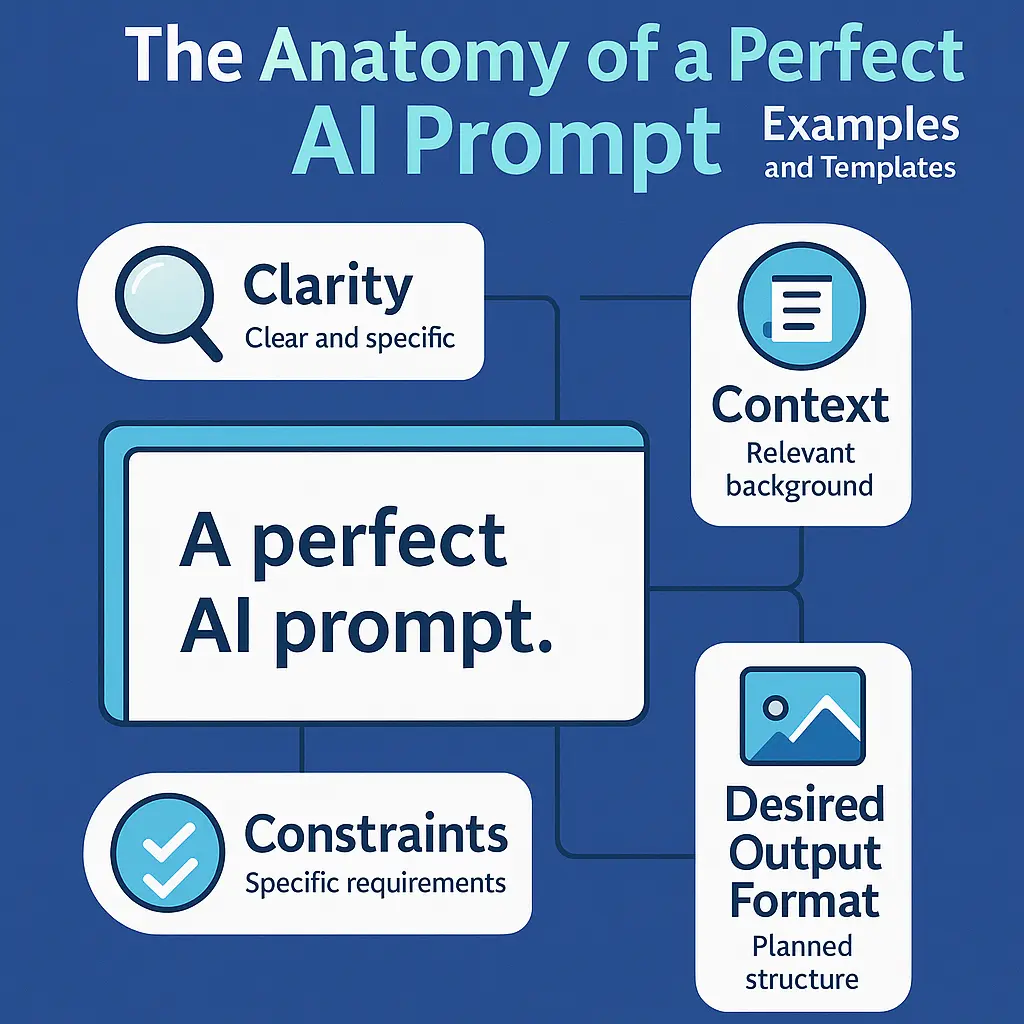
Start by identifying your most time-consuming content tasks and matching them with relevant prompts from this guide. Build workflows that combine multiple prompts for complete content creation processes. As you become more comfortable with AI-assisted writing, you'll discover that you can focus more on high-value strategic work—content planning, audience understanding, brand voice, and creative storytelling—while AI handles the heavy lifting of research, outlining, drafting, and optimization. The most successful content writers in 2025 aren't those who avoid AI; they're those who master it as a productivity tool. Begin experimenting with these prompts today and watch your content output and quality soar. For more advanced techniques, explore our comprehensive guides on the anatomy of a perfect AI prompt and how to write better prompts for ChatGPT.