Choosing the right AI assistant can significantly impact your productivity, creativity, and workflow efficiency. As of 2025, ChatGPT, Claude, and Gemini stand as the leading AI models, each backed by tech giants and offering distinct advantages. Whether you're a content creator, developer, researcher, or business professional, understanding the nuances between these AI models is crucial for maximizing their potential. In this detailed comparison, we'll explore their features, performance, pricing, and ideal use cases to help you select the perfect AI companion.
Understanding the Three AI Giants: An Overview
Before diving into the detailed comparison, let's establish a foundation by understanding what each AI model brings to the table and who develops them.
ChatGPT: The Pioneer of Conversational AI
Developed by OpenAI and launched in November 2022, ChatGPT revolutionized how we interact with AI. Built on the GPT (Generative Pre-trained Transformer) architecture, it offers both GPT-3.5 (free) and GPT-4 (premium) models. ChatGPT excels in creative writing, coding assistance, problem-solving, and maintaining engaging conversations. Its widespread adoption and extensive plugin ecosystem make it the most versatile option for general users.
Claude: The Ethical and Thoughtful Alternative
Created by Anthropic and founded by former OpenAI researchers, Claude prioritizes safety, reliability, and nuanced understanding. The Claude 3 family includes Haiku (fastest), Sonnet (balanced), and Opus (most capable) models. Claude's standout feature is its massive context window of up to 200,000 tokens, allowing it to process entire books or lengthy documents in a single conversation. It's particularly valued for its thoughtful responses and reduced tendency to hallucinate or provide harmful content.
Gemini: Google's Multimodal Powerhouse
Google's Gemini (formerly Bard) represents the search giant's entry into advanced conversational AI. Built from the ground up as a multimodal model, Gemini can seamlessly process text, images, audio, and video. Its deep integration with Google's ecosystem—including Search, Gmail, Drive, and Maps—provides unique advantages for users already embedded in Google services. Gemini comes in Nano (on-device), Pro (general use), and Ultra (most advanced) variants.
Feature-by-Feature Comparison: What Sets Them Apart
Now that we understand the basics, let's compare these AI models across critical dimensions to see how they stack up against each other.
Context Window and Memory Capabilities
The context window determines how much information an AI can process and remember during a conversation:
- ChatGPT: GPT-4 offers up to 128,000 tokens (approximately 96,000 words), while GPT-3.5 handles 4,096 tokens. This allows for substantial conversations and document analysis.
- Claude: Industry-leading 200,000 token context window, enabling processing of entire codebases, novels, or research papers in one go. This massive capacity makes Claude ideal for academic research and complex analysis.
- Gemini: Gemini 1.5 Pro supports up to 1 million tokens in experimental mode, with standard mode offering 128,000 tokens. This extraordinary capacity sets new benchmarks for long-form content handling.
Winner: Gemini edges ahead with its experimental 1 million token capacity, though Claude's 200,000 tokens remain highly practical for most real-world applications. Learn more about optimizing your prompt structure for better AI responses to maximize these context windows.
Multimodal Capabilities
Modern AI isn't just about text—it's about understanding and generating multiple types of content:
- ChatGPT: GPT-4 supports image inputs and can analyze photos, diagrams, and charts. DALL-E integration allows image generation. However, native video and audio processing are limited.
- Claude: Claude 3 models can analyze images and documents, including PDFs and charts. However, it currently lacks image generation capabilities and doesn't process video or audio natively.
- Gemini: True multimodal champion, natively processing text, images, audio, and video from the ground up. Can analyze video content, understand audio nuances, and seamlessly switch between modalities.
Winner: Gemini dominates multimodal capabilities with its native support for all content types, making it the best choice for complex multimedia projects.

Coding and Technical Capabilities
For developers and technical users, coding assistance is a critical evaluation factor:
- ChatGPT: Excellent code generation across 50+ programming languages, with strong debugging capabilities. Code Interpreter allows direct code execution and data analysis. GitHub Copilot integration enhances the development experience.
- Claude: Superior for explaining complex code and providing detailed technical documentation. Better at understanding architectural decisions and offering thoughtful refactoring suggestions. Particularly strong in functional programming paradigms.
- Gemini: Strong coding abilities with direct integration into Google Colab. Excellent for data science and Python-based tasks. Deep understanding of Google Cloud Platform tools and services.
Winner: ChatGPT leads for general coding tasks and breadth of language support, while Claude excels in code review and architectural planning. Gemini is best for Google Cloud-centric development.
Performance Benchmarks: Speed, Accuracy, and Reliability
Real-world performance metrics help us understand how these models actually perform beyond marketing claims.
Response Speed and Latency
Response time impacts user experience, especially for time-sensitive tasks:
- Claude 3 Haiku: Fastest model overall, delivering responses in under 3 seconds for most queries. Ideal for applications requiring real-time interaction.
- ChatGPT GPT-3.5: Very fast responses (3-5 seconds), making the free tier highly responsive for everyday tasks.
- Gemini Pro: Moderate speed (4-7 seconds), with excellent performance during off-peak hours.
- ChatGPT GPT-4: Slower (8-15 seconds) due to its complexity, but GPT-4 Turbo improves this significantly.
- Claude 3 Opus: Slowest of premium models (10-20 seconds), but delivers the most thorough and nuanced responses.
Accuracy and Hallucination Rates
Accuracy is paramount, especially for professional and academic use. According to independent testing by Stanford's HELM benchmark (Stanford HELM), here's how they compare:
- Claude 3 Opus: Lowest hallucination rate (approximately 2-3%), making it the most reliable for factual information and research.
- GPT-4: Very good accuracy (4-5% hallucination rate), with consistent performance across diverse topics.
- Gemini Ultra: Good accuracy (5-7% hallucination rate), with particularly strong performance on Google-indexed information.
Winner: Claude 3 Opus leads in accuracy and reliability, making it the preferred choice for academic research, legal work, and fact-critical applications.
Pricing and Value: What You Get for Your Money
Understanding the cost structure helps you evaluate which AI model offers the best value for your specific usage patterns.
Free Tier Offerings
All three platforms offer free access, but with different limitations:
- ChatGPT Free: Unlimited access to GPT-3.5 with occasional capacity restrictions during peak hours. No image generation or advanced features.
- Claude Free: Access to Claude 3 Haiku and limited Claude 3.5 Sonnet queries (typically 30-50 per day). Generous for casual users.
- Gemini Free: Unlimited access to Gemini Pro with full Google Workspace integration. Most generous free tier for heavy users.
Premium Subscription Comparison
For power users, premium subscriptions unlock advanced capabilities:
- ChatGPT Plus ($20/month): GPT-4 access, DALL-E 3 image generation, priority access, plugins, and Code Interpreter. Best overall value for diverse use cases.
- Claude Pro ($20/month): 5x more usage than free tier, priority access during high traffic, and early access to new features. Best for researchers and writers.
- Gemini Advanced ($19.99/month): Gemini Ultra access, 2TB Google Drive storage, and advanced Google Workspace features. Best value if you use Google services extensively.
Winner: Value depends on your ecosystem. ChatGPT Plus offers the most versatile features, Claude Pro provides the best writing and analysis tools, while Gemini Advanced delivers exceptional value for Google users. Check out our guide on essential elements of effective AI prompts to maximize your subscription value.

Best Use Cases: Which AI Model Excels Where
The right AI model depends on your specific needs. Let's break down the ideal scenarios for each platform.
When to Choose ChatGPT
ChatGPT is the best choice for:
- General everyday tasks: Email drafting, brainstorming, quick research, and casual conversation
- Creative writing: Story generation, marketing copy, social media content, and scriptwriting
- Coding and development: General programming across multiple languages, debugging, and code explanation
- Image generation: DALL-E integration for creating custom visuals and graphics
- Plugin ecosystem: Access to hundreds of third-party integrations for specialized tasks
- Education and learning: Interactive tutoring, concept explanation, and study assistance
When to Choose Claude
Claude is the best choice for:
- Long-form content analysis: Processing entire books, research papers, legal documents, or extensive codebases
- Academic and research work: Lowest hallucination rate ensures accurate citations and factual reliability
- Nuanced writing: Superior at understanding context, tone, and producing thoughtful, well-reasoned content
- Ethical and safety-critical applications: Built with constitutional AI principles for safer, more aligned responses
- Code review and architecture: Excellent at explaining complex systems and providing architectural guidance
- Professional writing: Business reports, technical documentation, and formal communications
When to Choose Gemini
Gemini is the best choice for:
- Google Workspace users: Seamless integration with Gmail, Drive, Docs, Sheets, and Calendar
- Multimodal projects: Tasks requiring analysis of images, videos, audio, and text together
- Real-time information needs: Direct integration with Google Search provides current data
- Data science and analytics: Native Google Colab integration and strong Python support
- Video analysis: Only model capable of natively understanding and analyzing video content
- Maximum context requirements: 1 million token experimental mode for processing massive datasets
Strengths and Weaknesses: The Honest Assessment
No AI model is perfect. Understanding the limitations helps set realistic expectations and choose wisely.
ChatGPT: Strengths and Limitations
Strengths:
- Most extensive plugin ecosystem and third-party integrations
- Best balance of capabilities for general users
- Strong creative writing and imaginative content generation
- Regular updates and active development community
- Excellent documentation and learning resources
Limitations:
- GPT-4 can be slow during peak hours
- Free tier (GPT-3.5) significantly less capable than competitors' free offerings
- Higher hallucination rate compared to Claude
- Knowledge cutoff means it lacks real-time information without plugins
- API costs can be expensive for high-volume use
Claude: Strengths and Limitations
Strengths:
- Most reliable and accurate responses with lowest hallucination rates
- Massive 200,000 token context window for extensive documents
- Superior nuanced understanding and thoughtful reasoning
- Strong ethical guardrails and safety features
- Excellent for professional and academic applications
Limitations:
- No image generation capabilities
- Smaller plugin ecosystem compared to ChatGPT
- Can be overly cautious, sometimes refusing benign requests
- Less creative than ChatGPT for imaginative tasks
- Limited availability in some regions
Gemini: Strengths and Limitations
Strengths:
- Best-in-class multimodal capabilities (text, image, audio, video)
- Seamless Google ecosystem integration
- Real-time information through Google Search integration
- Most generous free tier with unlimited access to Gemini Pro
- Experimental 1 million token context window
Limitations:
- Less mature than ChatGPT and Claude in some areas
- Occasional inconsistency in response quality
- Privacy concerns for users wary of Google's data practices
- Limited third-party integrations outside Google ecosystem
- Video and audio analysis still in experimental stages
Privacy and Data Security Considerations
Understanding how each platform handles your data is crucial, especially for business and sensitive applications.
- ChatGPT: OpenAI doesn't use conversations from ChatGPT Plus, Team, or Enterprise for training by default. Free tier conversations may be used for training unless opted out. Offers business plans with enhanced privacy guarantees.
- Claude: Anthropic commits to not training on user conversations without explicit permission. Strong privacy focus with minimal data retention. Particularly suitable for sensitive work.
- Gemini: Integrated with Google account data, which raises privacy considerations. Conversations may be reviewed by human reviewers. Business tier offers enhanced privacy controls and compliance certifications.
For detailed privacy policies, refer to OpenAI Privacy Policy (OpenAI Privacy), Anthropic Privacy (Anthropic Privacy), and Google Privacy (Google Privacy).
Making Your Decision: A Practical Framework
Here's a decision framework to help you choose the right AI model based on your priorities:
- Identify your primary use case: Are you writing, coding, researching, analyzing data, or creating multimedia content?
- Assess your ecosystem: Do you primarily use Google services, Microsoft products, or prefer platform-agnostic tools?
- Evaluate your budget: Can you justify a $20/month subscription, or do you need robust free tier access?
- Consider accuracy requirements: Are you working on fact-critical applications that demand minimal hallucination?
- Think about context needs: Do you need to process long documents, or are shorter conversations sufficient?
- Review privacy requirements: Do you handle sensitive data that requires specific privacy guarantees?
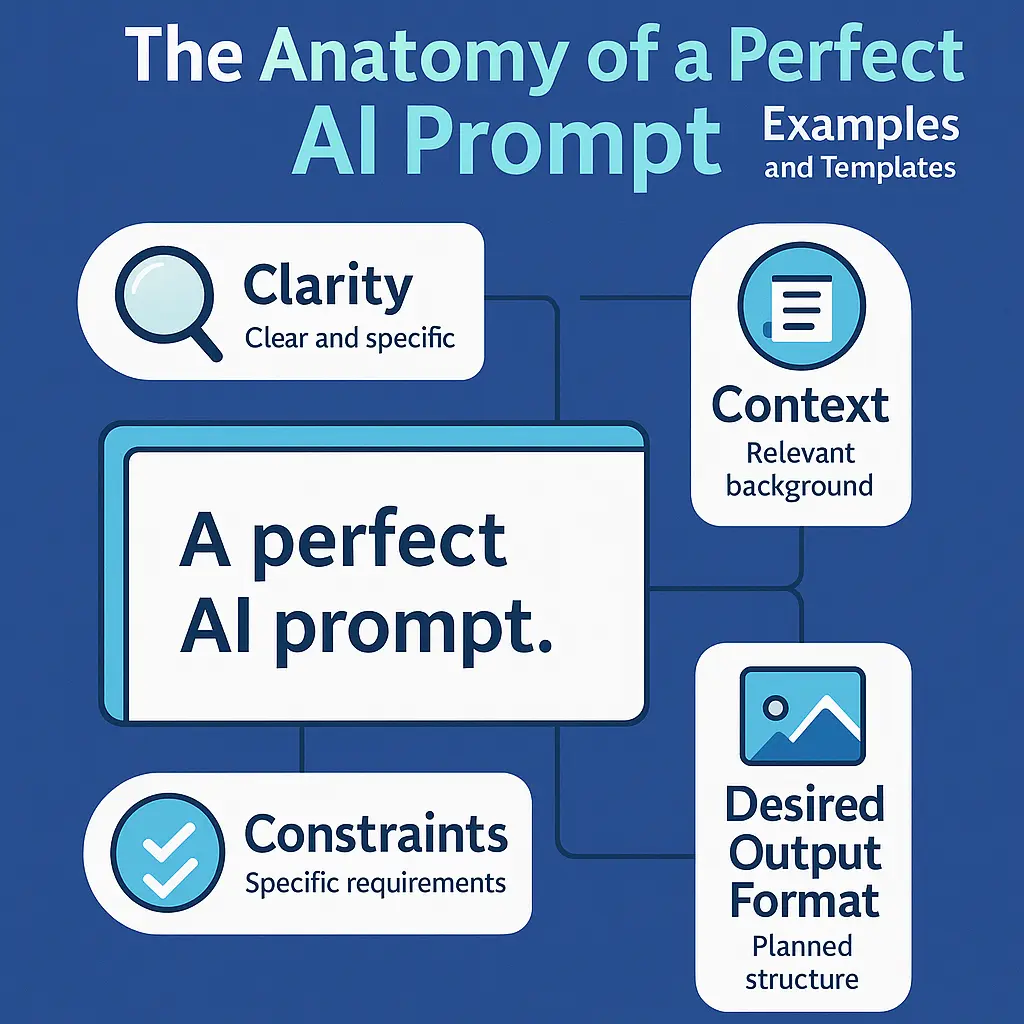
Many power users adopt a hybrid approach, using multiple AI models for different tasks. For example, use ChatGPT for creative brainstorming, Claude for research and analysis, and Gemini for Google Workspace automation. Understanding the anatomy of a perfect AI prompt helps you get better results across all platforms.
Conclusion: The Best AI Model Depends on You
After comprehensive analysis, there's no single "best" AI model—each excels in different scenarios. ChatGPT offers the most versatile, well-rounded experience with excellent creative capabilities and the largest ecosystem. Claude provides unmatched accuracy, thoughtfulness, and context handling for professional and academic work. Gemini delivers the most advanced multimodal capabilities and deepest Google integration, plus the most generous free tier.
For most users, ChatGPT Plus remains the best starting point due to its balance of features and capabilities. However, if you work extensively with long documents or require maximum accuracy, Claude Pro is worth the investment. Google ecosystem users will find exceptional value in Gemini Advanced, especially with the included Google Drive storage. The beauty of the current AI landscape is that you can try all three for free and discover which aligns best with your workflow before committing to a subscription. Experiment, explore, and let your specific needs guide your choice—you might even find that using multiple AI models gives you the best of all worlds.